
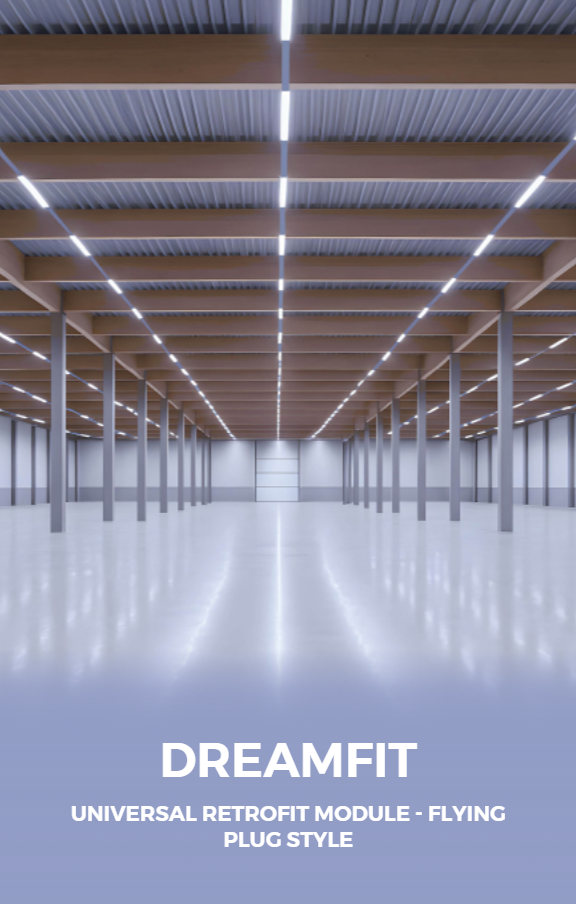
Problem first: why your warehouse still looks like dawn, not daylight
Warehouse light got pockets of bright and pockets of dark, workers complain, forklift drivers squint — this problem hits operations hard, lah. You already swapped bulbs before, but energy bill still high and maintenance still sotong. Start by treating the problem like a job: identify where visibility fails, how often fixtures need service, and whether controls behave or simply buzz. For factory-grade replacements, check an led industrial lights factory for consistent specs. At big industry shows like the Light + Building trade fair in Frankfurt, manufacturers showed the same lesson: a fit-for-purpose fixture and correct mounting beat raw lumen counts every time.
Why quick fixes fail — the real causes
Most attempts to “fix” lighting are cosmetic. These mistakes keep recurring:
– Replacing lamps one-for-one without checking beam distribution. – Choosing higher wattage instead of better optics; creates glare, not useful light. – Ignoring colour temperature and CRI; cold light may hide defects, warm light may mask hazards. – Skipping photometrics: you must test how light falls on racking and aisles, not just measure at the fixture. – Failing to plan maintenance access: the cheapest fixture becomes the most expensive when it’s hard to service.
Clear, actionable checklist to fix the lighting problem
Follow these steps and you’ll stop guessing:
– Map critical zones: racking aisles, packing stations, loading bays, and service pits. Assign target lux ranges — e.g., storage aisles ~100–200 lx, packing/inspection ~300–500 lx. – Match mounting to task: high-bay at 6–12 m needs narrow or medium beam optics; battens for lower service areas need wide distribution. – Choose CRI ≥80 for general tasks; CRI ≥90 for quality inspection. Colour temp 4000K is a good neutral start. – Verify photometric files (IES) for your layout before buying. Place fixtures to avoid longitudinal shadows along aisles. – Add simple controls: occupancy sensors for low-traffic zones, zoned dimming for mixed-use spaces. Don’t overcomplicate — start with manual override plus sensor. – Specify IP and IK ratings for wash-down or dusty service areas to reduce downtime.
Common pitfalls and how to avoid them
Don’t waste money on these traps:
– Buying on lumen-per-dollar alone. Lumen distribution and efficacy under real conditions matter more. – Trusting supplier photos instead of photometric reports. Ask for LM79/LM80 data and a maintenance factor estimate. – Underestimating thermal management. Poor heat dissipation shortens LED life; demand clear thermal specs. – Forgetting warranty terms and service timelines. A long warranty is worthless if the supplier vanishes after installation.
Picking the right manufacturer and what to ask
Look for manufacturers who can show real results and work with your constraints. Ask for these deliverables and behaviours:
– Completed case studies for similar ceiling heights and aisle widths. – Photometric layout proposals and predicted lux at task points. – Long-term performance data (LM80), and a clear warranty that covers lumen maintenance. – Local service capability or documented lead times for spare drivers and modules. That’s why it makes sense to consult a dedicated led high bay light manufacturer who can tailor optics and mounting to your exact floor plan.
Final word: solve the problem properly, not partially
Fix lighting by starting with the problem—map visibility, pick optics that deliver light where you need it, control the system simply, and insist on photometrics and test data. When teams stop squinting and maintenance drops, productivity and safety improve without weird trade-offs. For practical solutions and proven product specs, talk quietly with people who design for warehouses and service areas every day, like those at trieco; their layouts and test data make the difference between another temporary patch and a reliable, long-term fix.