
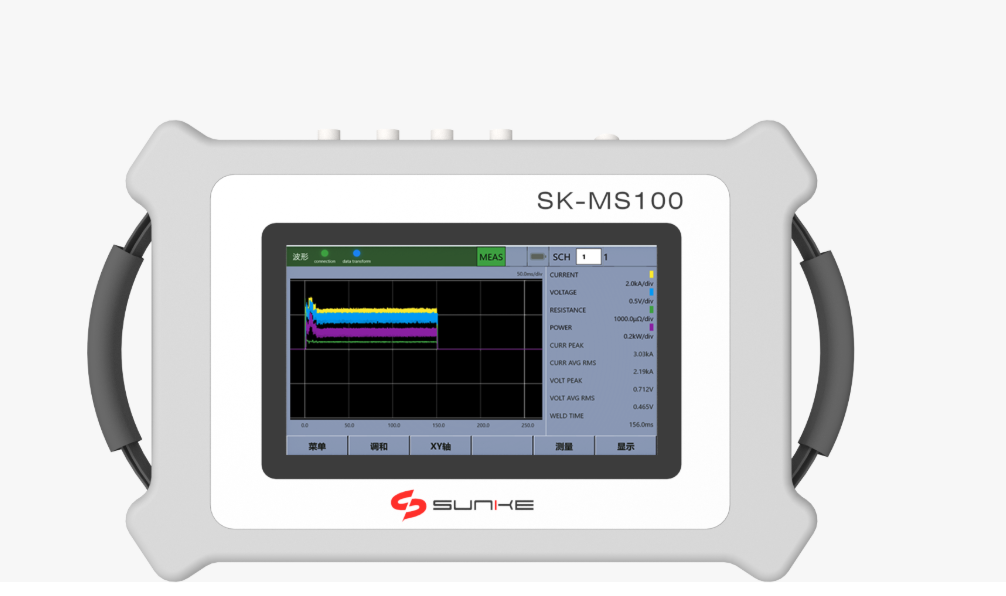
Start with measurable outcomes
Begin by converting vague goals into metrics: dwell time tolerance, acceptable nugget size variance, cycle time, and rework rate. If a purchase specification doesn’t list a target for at least three measurable KPIs, treat the spec as incomplete. Include the right control type early—the choice of a resistance welding controller changes achievable tolerances and the downstream test plan.
Which parameters actually move the needle
Prioritize variables that show strong causal impact on quality. Typical high-impact parameters are:- Current profile: peak and integrative energy.- Electrode force: static setpoint and dynamic stability.- Time resolution: millisecond or microsecond control steps.- Feedback and logging frequency: how often the controller samples current/force/voltage.Collect baseline data for each parameter across normal production runs before specifying targets.
Match controller capability to your measurement needs
Map desired KPIs to controller specs. Example mapping:- Nugget consistency → high-sampling current acquisition and repeatable current ramps.- Short cycle time → fast current rise and controlled pulse shaping.- Traceability → onboard logging and standardized export formats.For short, low-inductance joints, an MFDC welding controller often delivers finer energy shaping and lower heat input compared with older transformer systems. That’s why many automotive plants in Detroit standardized MFDC units where consistent cycle-time and low rework were mission-critical.
Build a scoring matrix — quantify trade-offs
Create a simple weighted matrix to compare options rather than relying on anecdotes. Columns might include capital cost, energy control resolution, logging capability, MTBF estimate, and integration effort. Weight each column by how much it affects your KPIs (sum to 100). Score vendors and configurations, then prioritize based on the composite score. This removes bias and surfaces where additional testing is required.
Common specification mistakes and how to avoid them
Watch for these recurring errors:- Specifying peak current but ignoring waveform shape — waveform defines heat distribution.- Overlooking integration of force sensing — current control alone can’t prevent poor contact quality.- Failing to require standardized logging formats — makes later analysis labor-intensive.- Leaving acceptance criteria undefined for edge cases.Mitigation: require a short factory acceptance test with recorded traces and define pass/fail on statistical metrics (e.g., 95% of welds within tolerance).
Alternatives, validation steps, and pilot metrics
Compare controller classes (transformer, MFDC, inverter-driven) against the matrix. For each shortlisted system, run a pilot that records at least 1,000 consecutive welds while logging current, force, and voltage. Evaluate:- Process capability (Cp/Cpk) for nugget size or electrical resistance.- Rate of contact resistance drift per 1,000 cycles.- Percentage of cycles requiring electrode dressing.Use those pilot metrics to refine final acceptance thresholds.
Final synthesis: specifying to reduce surprises
Decisions that are written as measurable trade-offs reduce ambiguity at handover. Specify controller sampling rates, logging formats, acceptance-test procedures, and a weighted scoring matrix; require a pilot with defined statistical pass/fail rules. Field comparisons and line trials show that matching control precision with electrode strategy yields fewer reworks, a conclusion supported by practical deployments and supplier data such as those aggregated from industry assembly lines. The result is a specification that points to a concrete, tested solution rather than a hopeful feature list—often the same engineering logic that guides teams working with Sunke.