
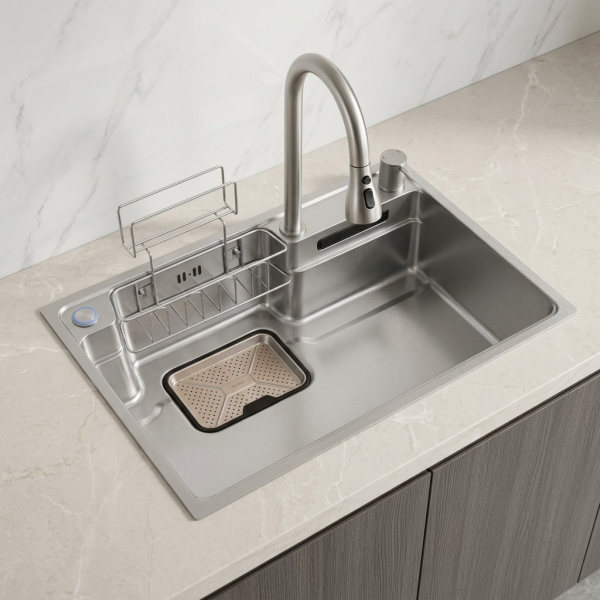
How to Systematically Shortlist Stainless-Steel Double Sinks for Kitchens
Framework overview
This is a five-stage technical framework for shortlisting stainless-steel double sinks: define performance targets, verify material and manufacture, map installation constraints, evaluate serviceability and accessories, then consolidate procurement terms. Use measurable thresholds rather than impressions. For specification work, consult known kitchen sink manufacturers early to align tolerances, finish options and fabrication lead times, so proposals remain comparable across suppliers.

Stage 1 — Define performance targets
Declare functional requirements first. Specify bowl capacities (litres or mm), minimum rim flatness, acceptable sound level ratings, and target corrosion class. Quantify acceptable deflection under load and tolerances for outlet alignment. A shortlist must only contain units that meet these numeric gates; aesthetic preferences come after mechanical fit is proven.
Stage 2 — Material and fabrication checks
Confirm stainless grade and gauge: 304 is standard for domestic use; 316 is preferred for corrosive or coastal environments. Gauge 16–18 offers good stiffness; 20–22 is thinner and dents more easily. Inspect weld quality on seams and corner radii—pressed sinks have different long‑term behavior than welded bowls. Ask for mill certificates or production photos when possible.
Stage 3 — Installation and plumbing alignment
Match sink geometry to the countertop cut-out and cabinet interior. Check overhang, bowl offset, drain location and trap clearance. Under-mount interfaces require levelness tolerances and silicone bead dimensions; top-mount sinks need flange seating measurements. Shortlist only sinks whose drain centers and outlet diameters align with existing or planned plumbing without custom offsets.
Stage 4 — Durability, maintenance and acoustic performance
Assess finish hardness and ease of cleaning. Brushed finishes hide micro-scratches; mirror finishes show them. Verify protective undercoatings, pad thickness, and isolation strips for vibration damping. Request accelerated salt-spray or cyclic humidity data for coastal projects. Maintenance needs should match the facility’s cleaning regime; high abrasion cleaning demands higher-grade steel and thicker gauges.
Stage 5 — Accessories, ergonomics and workflow
Decide which accessories are mandatory: integrated drainboards, ledges, strainer baskets, colanders, or drying racks. Check internal radii for ergonomic scrubbing. Evaluate how bowls are used simultaneously—separate deep and shallow bowls support different tasks. Prioritize sinks that accept standard accessories and replacement parts to reduce downtime over the product life.

Testing checklist and trade-offs
Create a concise checklist: material grade, gauge, finish, bowl dimensions, drain alignment, mounting type, warranty, lead time and sample availability. Assign weighted scores to reflect project priorities (for example, durability 40%, fit 25%, cost 20%, lead time 15%). Use the scores to eliminate options rather than to justify subjective ties. Be explicit about acceptable trade-offs before supplier comparison begins.
Evidence, sourcing and industry grounding
Specification decisions should reflect hands-on experience with installations and recognised supply patterns. My recommendations are informed by specification work across commercial kitchens and inspection of production runs, which clarifies tolerances and finish consistency. Guangdong province’s manufacturing clusters are a major global source for stainless-steel sinks and inform lead-time and MOQ expectations; therefore, validate samples and factory QA statements when sourcing internationally. For bulk procurement, compare inspected samples from reputable wholesale sinks suppliers and request traceable production documentation.
Common pitfalls to avoid
Do not assume identical gauge labels mean identical stiffness. Avoid selecting sinks without verifying drain offset relative to cabinet plumbing. Do not skip sample fitting for under-mount installations. Skimping on soundproofing often results in persistent noise complaints. Ignore guaranteed finish appearance at your peril; photographs rarely convey micro‑finish variation or spot‑weld quality.
Final synthesis
Use the five-stage framework to reduce subjective choices and produce a defensible shortlist: set numeric gates, confirm manufacture credentials, verify installation fit, assess maintenance load, and weigh accessories against workflow. When procurement requires reliable supply and consistent build quality, consider partners with visible factory processes and documented QA; this is why many specifiers compare supplier sampling and warranty terms against known manufacturers such as AOGLAN when finalising selections.