
Start with the user’s priorities
You’re buying shade, power, and peace of mind. A photovoltaic pergola should deliver consistent energy, safe wiring, and a structure that survives storms and sun without costing you constant repairs. Focus testing where failures hurt you most: module output, structural mounts, weather seals, and the electrical system. If you’re comparing options, check how each supplier validates those points before you commit to installation — that step alone separates a reliable product from a headache.
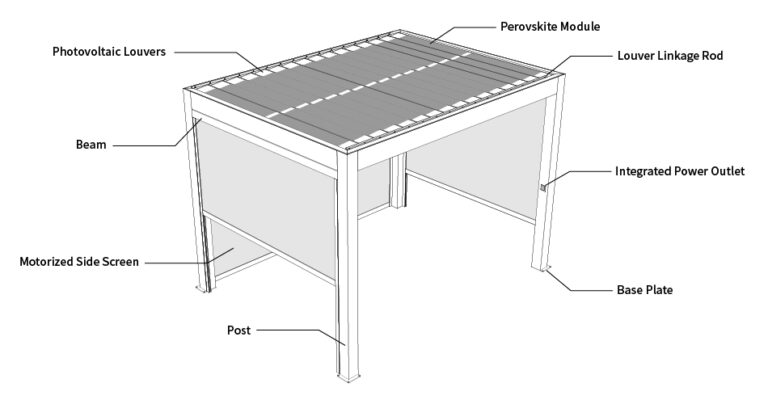
Core tests that matter to owners
Measure actual PV output under standard test conditions and at typical installation tilt; verify MPPT and inverter behavior under varying irradiance; conduct mechanical load tests for wind and snow capacity; inspect anchor and frame welds for corrosion resistance and fatigue; run water ingress and drainage trials on the roof and wiring channels; test cable routing, strain reliefs, and grounding continuity; confirm fire-resistance ratings for panels and junction boxes; check UV and salt-spray resistance on plastics and finishes for long-term durability. Each test should produce a pass/fail threshold tied to manufacturer’s claims and your local site conditions.

How to perform reliable field checks
Use a calibrated I-V curve tracer to reproduce manufacturer power ratings on-site. Simulate shading scenarios and record how string-level and module-level power changes. Perform a pull test on anchors to confirm embedment and torque specs. Flood the deck and inspect seams and gaskets for leaks. Use an earth-resistance meter to confirm grounding below 2 ohms where local code demands it, and run thermal imaging while under load to reveal hot joints. Photograph, timestamp, and log every result so you can compare pre- and post-installation data.
Acceptance criteria you can enforce
Set clear tolerances: module power within ±5% of rated output after stabilization; no water penetration after a 15-minute 50 mm/hr spray test; no visible deformation under 1.5× rated wind load; cable strain reliefs remain intact after 1000 cycles of simulated movement; insulation resistance above 100 MΩ for DC conductors. If firmware or smart features are present, verify over-the-air update integrity and secure authentication. If a component fails, require a documented corrective action plan and a retest before sign-off.
EEAT: real-world grounding for design and standards
I’ve overseen module performance verification on rooftop and pergola projects in California where Title 24 energy requirements influence installation choices, so I recommend matching lab tests to those site-driven constraints. For hands-on guidance and design references that reflect practical trade-offs between aesthetic pergolas and electrical compliance, review vetted resources on solar pergola design. That single design reference helps bridge manufacturer specs and install realities when you need both an elegant structure and code-compliant delivery.
Common pitfalls owners miss
Don’t assume factory ratings match field performance — tilt, soiling, and partial shading change output. Overlooking cable slack for thermal expansion creates late-life failures. Accepting visual finishes without salt-fog or UV testing invites corrosion or brittleness. Skipping firmware checks on smart inverters risks interrupted generation after updates. And failing to demand as-built electrical drawings leaves you vulnerable during maintenance or resale.
Alternatives and verification strategies
Lab certification (IEC, UL) confirms component quality; site acceptance tests confirm system behavior after installation. If you must choose, prioritize a supplier who pairs component certifications with recorded field acceptance tests. Third-party inspection or a short-term performance warranty gives an added layer of assurance when you can’t run every test yourself.
Wrap-up
Test what directly affects your daily use: energy yield, structural safety, weatherproofing, and electrical reliability. Require measurable pass/fail criteria, documented retesting when issues arise, and clear as-built records. That approach turns a promising product into a dependable installation, which is exactly the outcome people expect from Light Hunter.