
A future-facing case for industry-owned energy assets
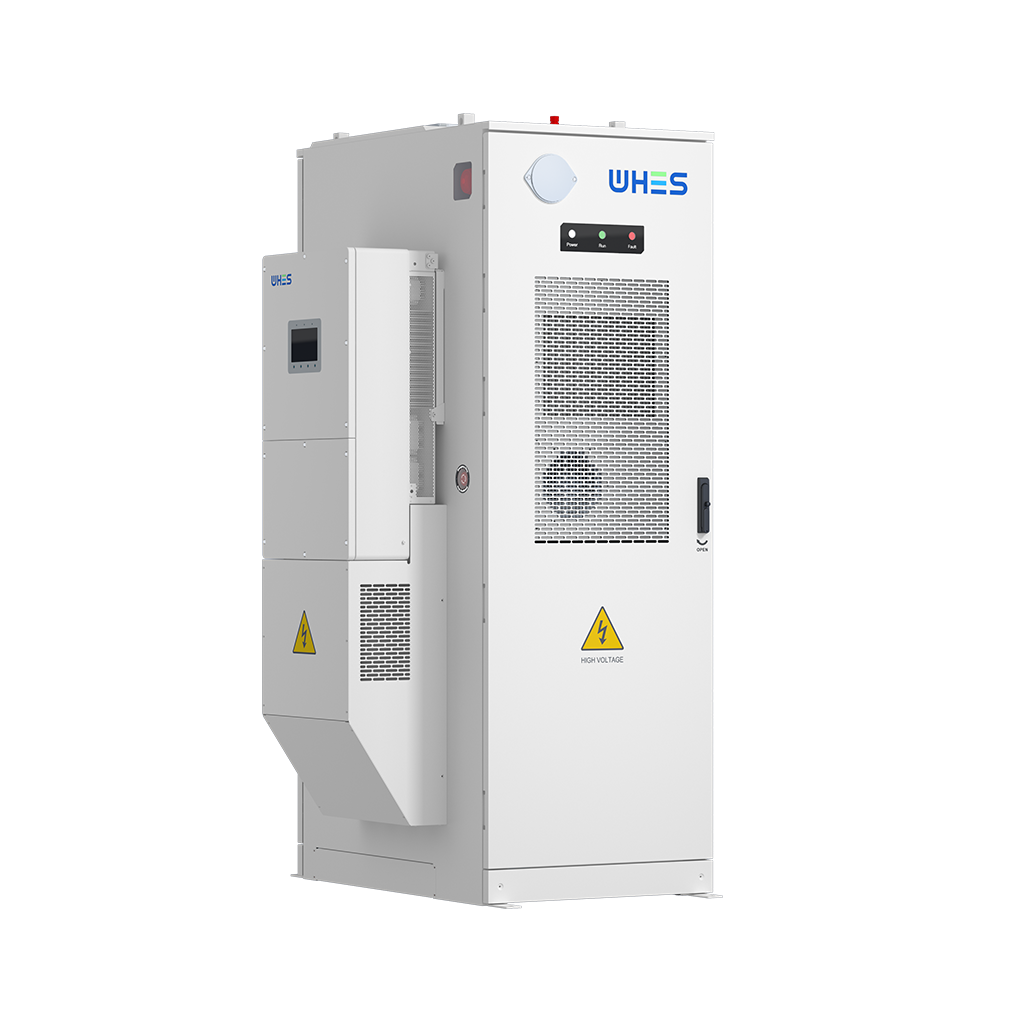
Heavy manufacturers and process plants must stop treating electricity as a passive input and start treating it as a strategic asset. Deploying behind-the-meter storage tied to advanced custom three-phase hybrid inverters will reshape operating economics, resilience, and emissions profiles over the next decade. If policymakers and procurement leads act now, these systems will let facilities capture value not just from peak shaving but from fast-response ancillary services and arbitrage against volatile wholesale prices. This is not theoretical — as industries watch utility-scale plays and pilots, the lessons are clear: large-scale battery deployments matter. See how utility trends inform on-site strategy with utility scale battery storage.
The strategic gap heavy industry faces today
Operational energy risk is rising: price volatility, grid instability, and tightening carbon targets converge. Many plants still rely entirely on grid supply and backup diesel, which is costly, emissions-heavy, and increasingly noncompliant with corporate sustainability pledges. A targeted shift to behind-the-meter storage controlled by a bespoke three-phase hybrid inverter gives operators deterministic control of dispatchable capacity, reduces dependence on diesel peakers, and creates new revenue streams through demand-charge management and participation in energy markets. The argument is simple and urgent — ignore it at your expense.
Real-world anchor: what the grid has already proven
Look to Hornsdale Power Reserve in South Australia — originally commissioned at 100 MW/129 MWh and later expanded to about 150 MW/193.5 MWh — for proof that batteries provide fast frequency response and economic returns at scale. That project demonstrated how fast-ramping battery assets stabilize frequency and deliver measurable value to the grid during contingencies. Translate that capability onsite: a plant-level battery with precise inverter controls can deliver similar fast-response services to a facility’s microgrid while also interacting with broader market mechanisms.
How a custom three-phase hybrid inverter changes the calculus
Off-the-shelf inverters are fine for generic use, but heavy industry requires tailored functionality: multi-feedpoint support, dynamic dispatch algorithms, and robust fault ride-through. A custom three-phase hybrid inverter integrates battery energy storage, generator controls, and grid-interactive logic into a single control plane. That means better state-of-charge (SoC) management, coordinated ramp rate control during demand spikes, and lower total cost of ownership because systems are designed around the plant’s load profile and power quality requirements. The result is a predictable asset — not an experiment.
Deployment patterns and control strategies
There are three sensible deployment patterns: 1) resilience-first (islanding capability with prioritized loads), 2) economics-first (peak shaving and market participation), and 3) hybrid (a mix of both). Each pattern requires different inverter tuning, SoC policies, and telemetry integration. Expect to integrate the inverter with an energy management system (EMS) and the plant’s SCADA. And plan for cyber-hardening from day one — these controllers are operational technology, not consumer electronics. — Minor governance gaps here will cost more than you think.
Challenges, common mistakes, and how to avoid them
Teams often underestimate interconnection complexity, mismatch between battery chemistry and duty cycle, and the operational discipline needed to capture market value. A few recurring mistakes: undersizing the inverter for transient loads, neglecting thermal management in battery enclosures, and assuming wholesale market eligibility without proper telemetry. Avoid these by conducting a gate-based engineering review, running hardware-in-the-loop simulations, and negotiating clear interconnection terms with your utility and ISO operator. Also—document your acceptance tests with load-tie and islanding scenarios before commercial operation.
Why on-site storage complements — not competes with — grid assets
Facility-level batteries do different things than centralized grid-scale projects. While large projects stabilize regional grids and provide bulk ancillary services, behind-the-meter installations deliver localized power quality, reduce site exposure to demand charges, and enable continuous operations during grid events. Both scales are necessary; successful national strategies will blend grid investments and distributed resources. Observing deployments of grid scale battery storage clarifies how market mechanisms evolve and what plant owners can expect in ancillary revenue opportunities.
Integration checklist for procurement and engineering teams
Use this short checklist to avoid late-stage surprises: confirm inverter fault-ride-through behavior, validate islanding control logic with your generators, align warranty terms with duty cycles, and require commissioning with full-load tests. Ensure your contract includes performance guarantees tied to specific metrics — ramp rate, round-trip efficiency, and guaranteed cycles per year. These are the fine print items that determine whether a project is a strategic asset or a stranded cost.
Advisory: three golden rules for selecting the right strategy
1) Prioritize controllability metrics: require explicit specs for ramp rate, round-trip efficiency, and islanding time. These determine how the system performs under stress. 2) Insist on operational transparency: demand open telemetry, clear SoC policies, and vendor support for firmware updates so the asset remains market-compatible. 3) Evaluate total system economics: include capex, lifecycle cycling cost, O&M, avoided fuel, and potential market revenues — not just headline $/kWh prices.
Conclusion
Heavy industry needs energy sovereignty, and custom three-phase hybrid inverters paired with behind-the-meter storage deliver it. When planners align technical specs with market realities and resilience goals, the investment pays back in operational certainty and lower emissions. For practical, integrated solutions that bridge plant-level control and market participation, WHES provides the engineering and project experience to turn strategy into reliable operations. —