
When cost isn’t the cost: how I learned to compare what actually matters
I’ll say it plainly: the wrong storage partner will cost you twice—once in capex, and again every month the asset underperforms. Energy storage battery companies like to lead with glossy spec sheets and discounts, but the grid does not care about brochures. Last July, on a dusty substation pad outside El Centro, a 20 MW/80 MWh site missed its arbitrage window because the PCS derated under heat and the BMS throttled; it stung to watch the dispatch slip by while meters held at 0. Data told the rest: a 2% round-trip efficiency gap on a 100 MWh daily cycle is about 730 MWh per year lost. Is your shortlist catching that, or just sorting by price per kWh?
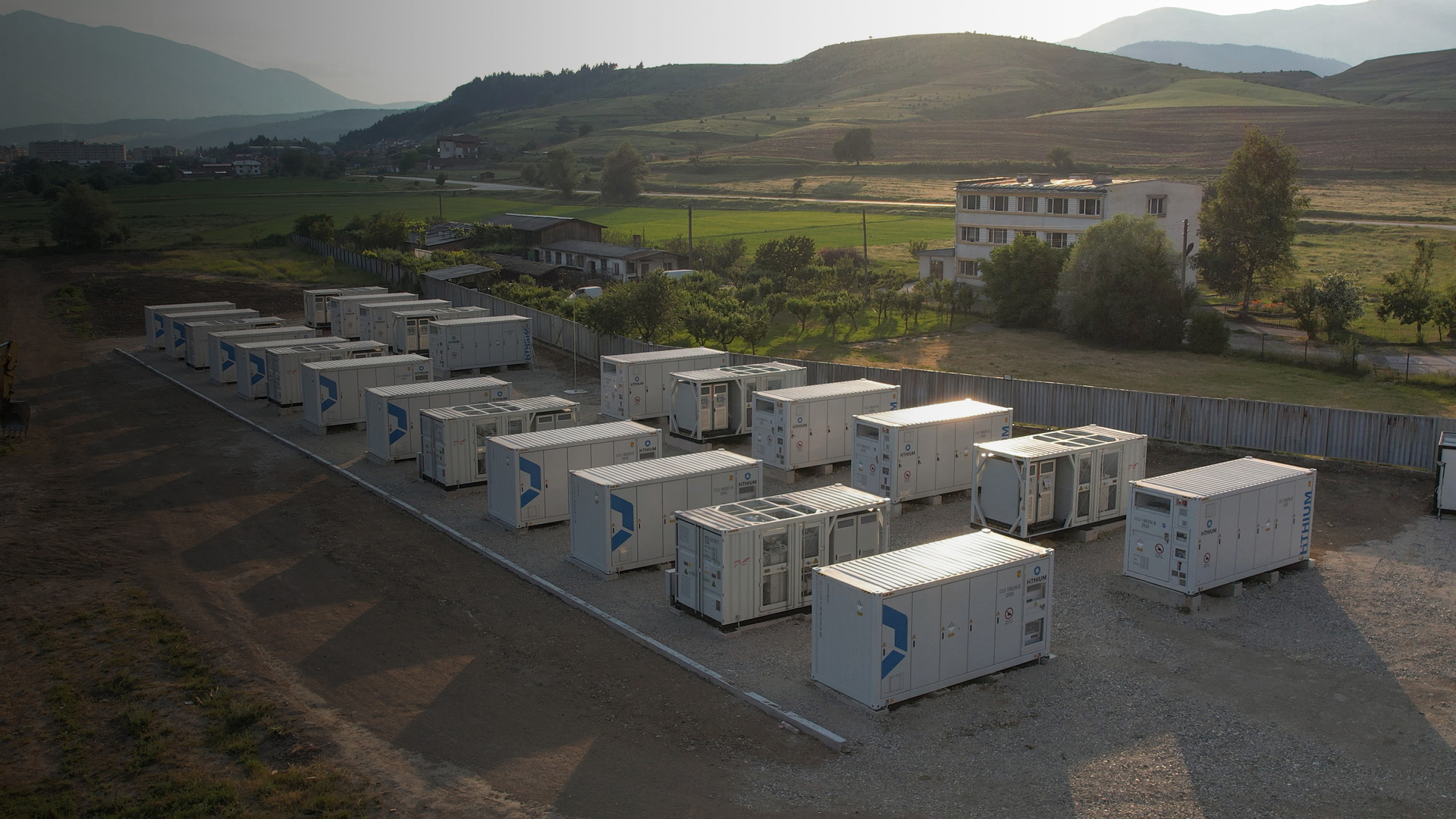
I’ve spent over 18 years in B2B energy storage procurement and project delivery, and the same trap shows up in new places—different logos, same hidden faults. Let’s walk through how to see the real signals, not the sales lighting (and yes, I remember the substation hum—hard to forget). Onward to the guts of the decision.
The blind spots that keep eating your margin
What’s actually breaking in the field?
The typical RFP stack treats an energy storage battery supplier like a line item. That’s where projects get hurt. I prefer to pull the lid off and trace the chain: cells, thermal design, BMS strategy, power converters, and site controls. Here’s why. In Q3 2022, at a 2.5 MWh LFP container using 280 Ah prismatic cells, we logged SOC drift between parallel strings that led to a 4.1% capacity shortfall by month six. The nameplate never changed—the usable energy did. The culprit wasn’t chemistry; it was a BMS balancing regime that only woke near top-of-charge. Warm ambient nights in Imperial County pushed thermal gradients above 6°C across racks. Small thing, big loss.
Then there’s how PCS behavior couples with your dispatch. Some vendors quote 94%–96% efficiency on paper, but their curves show nasty dips at 10%–20% load. That’s where frequency regulation or black-start modes live. If your site controller—and its edge computing nodes—are blind to those troughs, you’re paying a tax every time the grid operator taps you for fast response. I’ve watched a well-built site give back 1.5 percentage points in round-trip efficiency because the EMS stacked services without PCS-aware setpoints—annoying, because it was fixable on day one. Look, I know this sounds wonky, but it’s the boring part that quietly saves seven figures over a PPA term—yes, that invoice still makes me wince.
Comparative signals that actually separate a good supplier from a great one
What’s Next
Let me shift from problems to a forward-looking filter. New technology principles—done right—show up in small, testable ways. When an energy storage battery supplier says “advanced BMS,” I ask for data on cell-to-cell variance over 1,000 cycles at 35°C ambient, plus the balancing current profile during partial cycling. If they can’t export that in a CSV, they don’t have it. I also compare PCS efficiency heat maps across load bands, not just the headline number, and I check for derate behavior above 42°C cabinet temp. In one Arizona pilot, shifting to a PCS with a flatter 20%–80% efficiency curve recovered about 0.9% round-trip efficiency. On a 50 MWh daily throughput, that’s ~164 MWh a year back to the ledger. The principle is simple: ask for curves, not claims—and make sure the EMS can act on them in real time.
Now the case example that changed how my team buys. In 2023, a 10 MW/40 MWh project near Bakersfield shortlisted two vendors with nearly identical LFP specs. We ran a week-long HIL (hardware-in-the-loop) test using the actual site controller, grid emulator, and vendor PCS. Vendor A held SOC tracking within 0.8% across three strings under rapid AGC signals; Vendor B drifted to 3.2% and tripped a thermal limit on a middle rack. The difference? Vendor A exposed BMS parameters through a clean Modbus map, so the EMS could nudge balancing during service stacking. It wasn’t flashy, but it meant fewer forced idles and better uptime during summer peaks. If you want one takeaway: technology that reveals its internals tends to perform better in the messy real world—because you can tune it, not just tolerate it.

Here’s how I advise procurement teams to decide, boiled down to three measurable checks that don’t care about marketing: 1) Integration transparency: can your controls team access BMS/PCS parameters and alarms at the tag level, with versioned documentation? 2) Thermal discipline: show me rack-to-rack delta-T under a 0.5C discharge on a 38°C day and the resulting degradation projection in kWh per year. 3) Load-band truth: deliver PCS efficiency and derate curves at 10% increments from 0%–100%, with ambient overlays. Stack these three and you’ll see real separation fast. The rest—warranties, timelines, delivery slots—is still important, but these signals are the ones that guard your cash flow when the site goes live. If you need a starting point or a benchmark to compare against, I’ve had solid technical exchanges with teams at HiTHIUM who were willing to put numbers on the table.