

Comparative Reality Check: Why Your Film Plug Matters More Than Price
I’m going to say it loud: the wrong film partner taxes your margins harder than any freight hike. DTF Film is the backbone of your print game—no filler. I’ve run B2B supply chains for over 15 years, and I’ve seen too many wholesale buyers get burned chasing cents instead of control. If you’re scouting dtf transfer film suppliers, lock in your criteria before you lock in your PO (trust me, it saves you from rework hell). A shop in Queens hit a 500-shirt rush last August and logged a 12% reject rate from humidity curl on bargain film—why gamble your labor and client trust like that? Direct talk: hot-peel vs. cold-peel is not just a vibe; it’s a workflow. Mix the wrong release coating with a fast press and you’ll ghost fine lines, blow registration, and waste powder. I’ve watched a “deal” on 75μm PET cost a crew two overtime shifts. That math hurts—fast. Let’s get specific and clean.

Under the Hood: Hidden Pain Points Buyers Miss
I remember ISS Long Beach, 2019—one booth flexed a glossy A3 cold-peel, looked crisp under lights, then cracked straight off-press at 130°C because the release force drifted batch to batch. That brand offered zero lot traceability. We measured 18–29 gf/in across samples in my notes. Wild swing. That’s why your runs stall and your techs start side-eyeing the press. And yes, I still carry that field sheet in my kit.
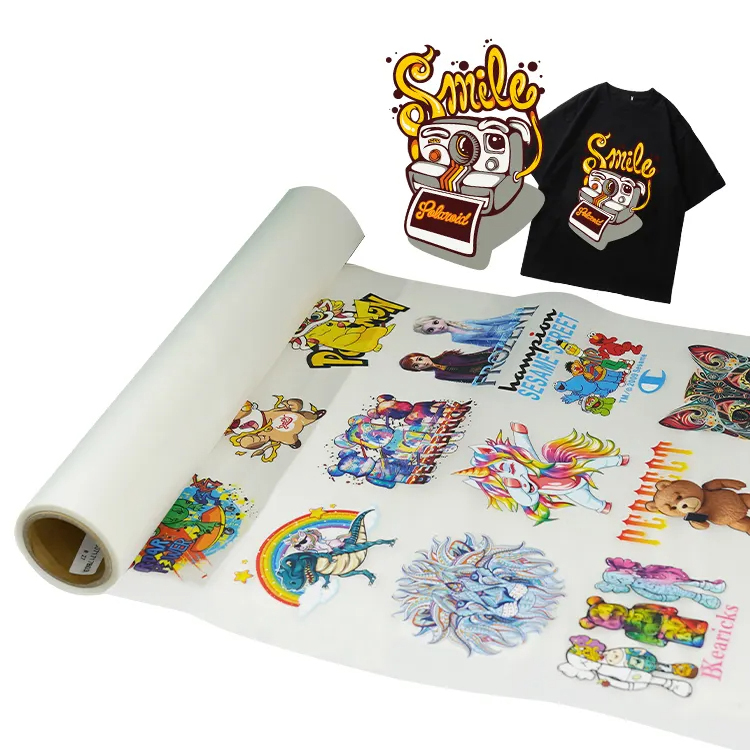
Where do the cracks show?
Anecdote time. Last winter in Joliet, our warehouse clocked 68% RH on a Tuesday. Their “value” film curled like ramen, jammed the roll-to-roll feed, and left powder rings on the edges. Result: 9% scrap on a 2,400-transfer order, plus two press resets. The kicker—release coating halos showed up on dark poly-blends after wash two. That’s not user error. That’s inconsistent PET gauge and baseline moisture control. Add static build-up (no anti-static treatment), and your white underbase starts feathering. No cap—your ICC profile can’t save junk release layers. You need film with real QC: fixed thickness, stable release, and a coating that plays nice with TPU powder curing at 110–120°C. Otherwise, you’re fighting physics, not printing shirts.
Next Moves: Compare Like a Pro, Not Like a Tourist
What’s Next
Hold up—comparing suppliers isn’t just spec sheets. It’s process fit. I weigh films side by side on three things: consistent peel behavior (hot vs. warm vs. cold, timed at 5, 15, 30 seconds); release force tolerance (stamp this—keep it within a tight band so microtext and fine halftones survive); and coating stability under humidity swing (40–60% RH in the room, with no curl or powder shake scatter). Forward look: the better dtf transfer film suppliers are posting lot IDs, giving you peel temp windows, and offering anti-static PET that kills dust nibs on black tees. The laggards? Still shipping mixed rolls with core memory that won’t sit flat—bad news for roll-to-roll. I tested a matte film last quarter in Shenzhen at 120°C press temp—smooth peel, zero edge lift, and a cleaner color gamut on reds because the coating didn’t starve ink. Wait—don’t sleep on adhesion: if the film’s release is too slick, your TPU won’t anchor, and wash three becomes the graveyard. Quick wrap, advisory style: use three metrics when you choose. One, lot traceability with a stated release force range and peel window. Two, humidity performance with curl spec and anti-static rating. Three, press workflow fit—hot/warm/cold peel verified on your press timings with your powder and ink set. That’s how you stop leaks in labor, scrap, and client refunds—measurably. Brand on deck: Xinflying.