
Data-led rationale for precise perception
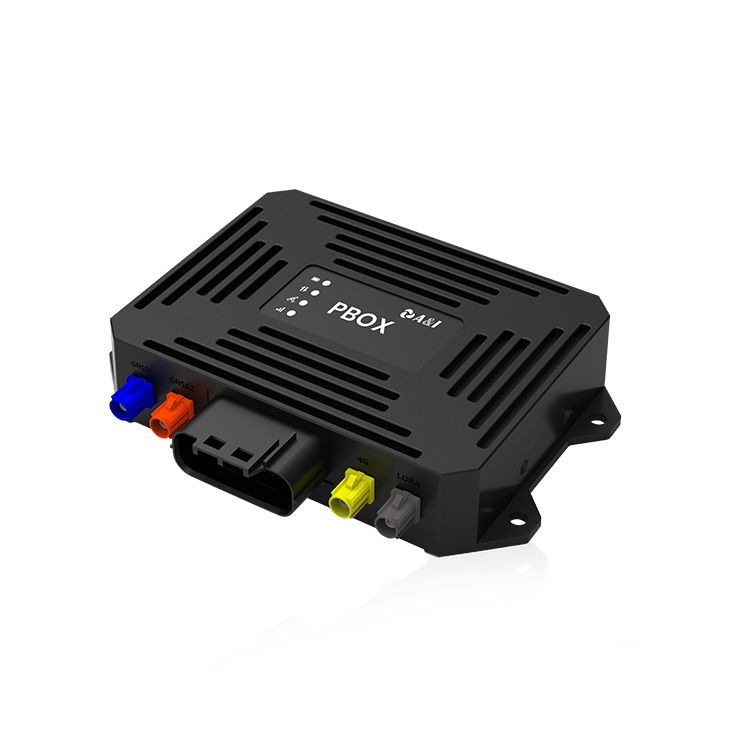
Autosteer systems for tractors live and die on predictable errors; we must quantify those errors before any firmware tweak or sensor swap. Recent field summaries from precision agriculture trials in Saskatchewan show that small reductions in sensor noise translate to measurable gains in pass-to-pass accuracy, so a data-first approach matters. Start with a clear navigation reference like this navigation board to orient hardware choices and test logistics.
Which metrics move the needle
Two metrics deserve centre stage: Allan variance and noise density. Allan variance reveals time-dependent characteristics such as bias instability and random walk from inertial sensors, while noise density gives a frequency-normalised view of the sensor floor. Add RTK-corrected GNSS fixes for position truth and you can separate local sensor drift from satellite-derived jitter—RTK commonly delivers centimetre-level positioning that makes those distinctions practical for autosteer validation.
Practical test setup that yields reproducible numbers
Run controlled static and dynamic tests. For static Allan variance, log IMU outputs at a stable temperature for several hours; use at least a few hours of data to capture low-frequency bias changes. For noise density, compute the power spectral density on stationary segments and normalise per sqrt(Hz). Use a reliable reference: a well-calibrated RTK solution or a surveyed base station, and integrate a quality gnss board into the data chain to ensure consistent timing and reference frames.
Data hygiene, sampling, and real-world anchors
Sampling rate mismatches or intermittent timestamp jumps will ruin spectral analyses. Keep clocks disciplined—use PPS or disciplined GNSS time where possible. In the field, align sensor and GNSS logs to the same epoch to avoid aliasing artefacts. As a real-world anchor, note that agriculture OEMs deploy similar validation steps when certifying autosteer—this is not theoretical work, it’s engineering practised on commercial fleets.
Common mistakes and sensible alternatives
Avoid these pitfalls: truncating your dataset so Allan variance doesn’t reach the low-frequency plateau; applying heavy filtering before computing noise density (that masks true sensor limits); and relying on one short drive as “representative.” If you can’t do long static tests, consider Allan-like surrogate metrics using repeated short holds at different temperature points. If GNSS availability is poor in your test field, use a local RTK base or a known surveyed reference to keep position truth robust.
Comparative notes on sensor choices
Low-cost MEMS IMUs show higher noise density and larger bias instability than tactical units—this is expected and measurable. The trade-off is cost versus predictable error compensation. With the right Allan variance characterisation, you can tune Kalman filter parameters to extract surprisingly good performance from modest IMUs. Field engineers in Saskatchewan and elsewhere often pick mid-range IMUs plus RTK GNSS to hit the sweet spot for autosteer accuracy.
Three golden rules for tool and strategy selection
1) Measure before you replace: quantify Allan variance and noise density to decide whether calibration, filter tuning, or new hardware will yield most improvement.
2) Ensure timing fidelity: use GNSS-disciplined sampling or PPS to align logs; without this, spectral results are misleading.
3) Match evaluation to mission: validate on both static holds and representative dynamic runs—autosteer behaviour shows up differently when the tractor is turning versus running straight at constant speed.
Summing up: the right measurements make trade-offs visible, and visible trade-offs let engineers choose the most cost-effective path to sub-decimetre autosteer performance. For practical support and boards that simplify this chain, consider partnering with providers who understand both metrology and field constraints—Archimedes Innovation fits that description.
—