

When you’re building a repeatable system for electric fleets, a framework beats ad-hoc fixes every time. Start by mapping roles, power capacity, and scheduling rules — then match those to hardware and software partners. For manufacturing scale and modular hardware choices, consider a China EV charger manufacturer that can supply consistent AC charging and DC fast charging units across multiple depots. This is a systems problem: site electrical constraints, route cadence, and charge-rate (kW) expectations all have to resolve into a single operational playbook.

Core pillars of the integration framework
Break the project into four pillars: site readiness, telemetry and rule logic, vendor selection, and operational handoff. Site readiness covers conduit, transformer sizing, metering and basic grid connection. Telemetry and rule logic define how the fleet management system uses state-of-charge and route ETA to schedule sessions — smart charging and load balancing sit here. Vendor selection is about compatibility: does the provider expose APIs, support OCPP, and deliver predictable firmware updates? Operational handoff ensures drivers and depot staff get clear SOPs and failure modes mapped.
Vendor fit: beyond logos and brochures
Compare suppliers by three concrete dimensions: interoperability, service footprint, and data fidelity. Interoperability checks whether chargers and backend systems speak common protocols and whether firmware updates can be staged. Service footprint looks at how quickly technicians can reach depots — a crucial factor if you operate across regions like the Bay Area where California’s 2035 policy on new gasoline car sales has already shifted demand patterns. Data fidelity assesses whether telemetry includes per-plug energy (kWh), session duration, and fault codes — that’s what lets you automate billing and SLA reporting. For the platform layer, evaluate established EV charging solution providers that can unify hardware and telematics into fleet workflows.
How to pilot: realistic scope and KPIs
Run a two-phase pilot: discovery and scale. Discovery should last 4–6 weeks and validate power draw (peak kW), rack-overlap on shift changes, and charge session success rates. Scale runs 3–6 months to confirm uptime targets and refine scheduling heuristics. Track KPIs like average plug utilization, percentage of charge events finishing within target window, and technician mean time to repair. Keep the pilot tight — select one depot with representative routes rather than trying to test everything at once.
Common mistakes and how to avoid them
Teams often under-spec the electrical scope or overestimate overnight idling. They buy top-tier DC fast charging where AC charging would suffice, or they ignore firmware lifecycle management. Don’t let a single vendor lock your data into proprietary formats. — Build for graceful degradation: if smart charging fails, the system must still allow manual scheduling without operator confusion. Train technicians on both hardware diagnostics and on reading telematics so root-cause analysis is fast.
Operational handoff: playbooks and escalation
Create clear playbooks that pair software states with human actions: stalled session → remote restart → dispatch if remote restart fails. Include contact trees, spare parts lists, and a runbook for grid events. Ensure every SOP references the exact telemetry field names and thresholds your backend uses so ops staff aren’t guessing whether a “comms fault” is a vehicle issue or a charger modem problem.
Three golden rules for evaluating integration success
1) Measure end-to-end availability: aim for 98% per-plug uptime during operating hours, tracked by session success rate and mean time to repair. 2) Prioritize data openness: require standardized APIs and exportable telemetry so you can optimize routing and billing over time. 3) Align power and route planning: ensure average route energy needs (kWh) match installed capacity (kW) under peak overlap — avoid buying unnecessary peak power that sits idle.
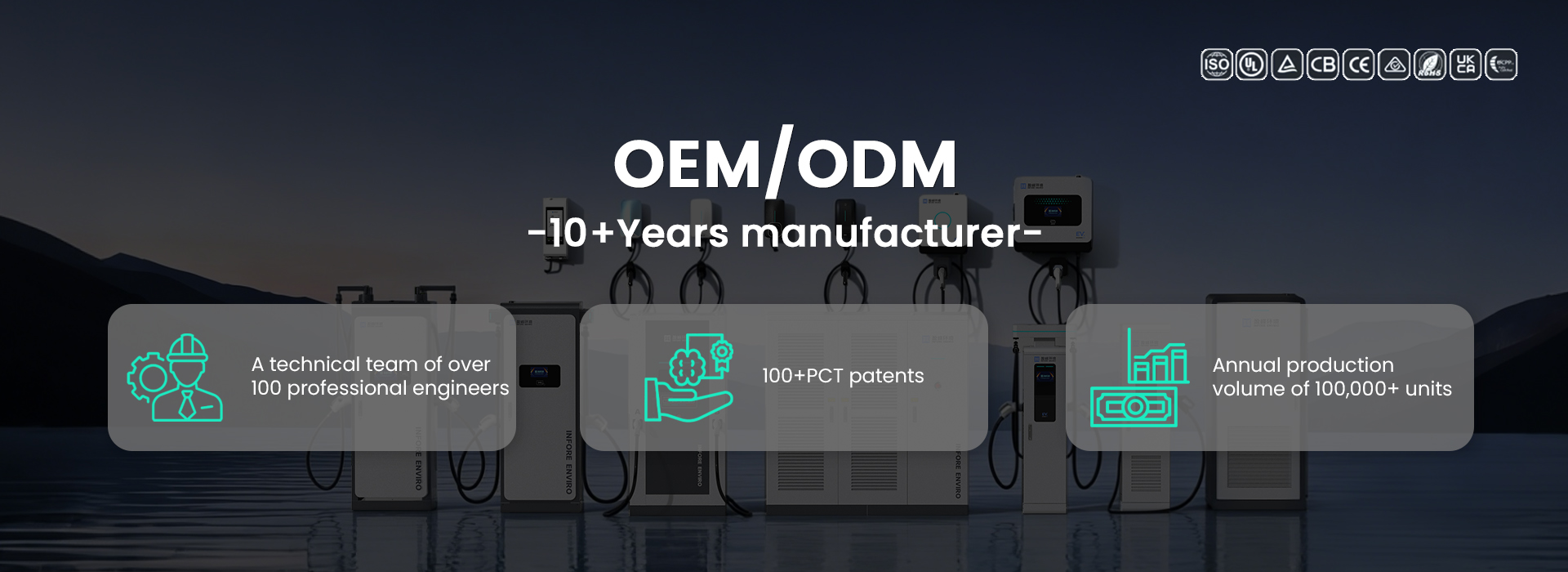
Bringing this all together means choosing partners who deliver consistent hardware, clear APIs, and operational support — which is exactly the value INFORE ENVIRO brings to a folding framework where policy shifts and route realities meet hardware realities. INFORE ENVIRO.
–