

Why a Simple Label Decides Meeting Momentum
Let’s be blunt: the name in front of a person shapes who speaks, who pauses, and who gets heard. The digital name plate sits at the center of that small but mighty power game. Picture a quarterly review: late seat swaps, remote guests on-screen, two new execs joining last minute. In many teams, setup hiccups eat into the first 10 minutes—sometimes more—and small errors compound into big misreads (and yes, small things add up). Data from internal ops audits often shows that prep friction and mislabeling delay nearly a third of meetings. So, are we ready to stop treating identity display as an afterthought and start treating it like infrastructure?

We need a better baseline for accuracy, speed, and trust. And we need to define it in practical terms, not buzzwords. The question is simple: what should modern name systems do, and what must they never do—ever? Let’s move to the mechanics that decide both.
Exposing the Pitfalls of Traditional Placards and Improvised Screens
Where do traditional tools fail?
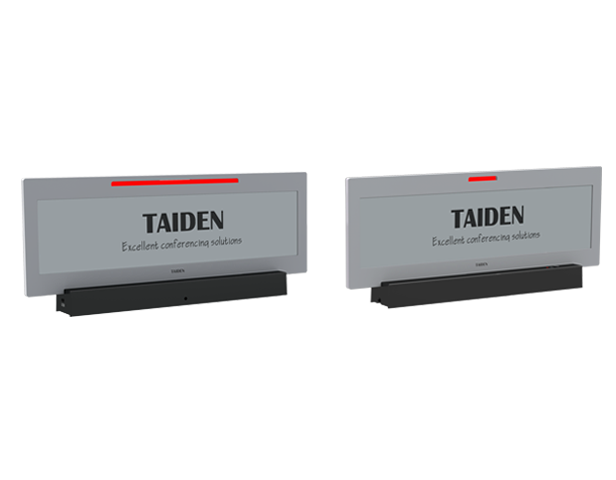
The shift to an electronic nameplate for conference reveals exactly what old fixes got wrong. Paper tents are cheap but brittle in fast-moving rooms; they break when names, roles, or seating change midstream. Tablets seem clever, but glare, battery anxiety, and inconsistent fonts add friction under pressure. Static LED strips lock you into one role per seat—great for a showroom, not for a boardroom. More subtly, ad‑hoc setups introduce hidden costs: carts of chargers, plug strips, and last‑second wiring. Each extra cable is a failure point. Look, it’s simpler than you think: when identity display depends on manual swaps, the room inherits delays and doubt—funny how that works, right?
Technical weak points stack up. Consumer tablets pull power fast and force ugly workarounds with power converters. Wi‑Fi congestion spikes latency just as the chair says, “Let’s start,” and then names lag or freeze. Devices that lack resilient RF transceivers struggle in dense spaces or mixed materials. Firmware without predictable update cycles risks mismatched branding, titles, or security policies. And when there’s no local mesh network to fall back on, a single router blip can stall the whole table. The end result is fragile identity—visible to all, trusted by none. That’s not how you anchor a high‑stakes room.
Principles Behind Next‑Gen Systems—and How to Compare Them
What’s Next
From here, look forward. The question is not “digital or paper,” but which system aligns with the flow of work. A modern digital name plate earns its keep through a few core principles: predictable power, smart updates, and graceful failure modes. Low‑draw displays keep names visible all day without a tangle of cords. Local sync trims latency, so changes land in seconds, not minutes. When networks wobble, a resilient channel—whether a dedicated RF layer or a quiet mesh—keeps names steady while the rest sorts itself out. And at the edge, small controllers (think edge computing nodes) manage room logic, so the system keeps pace with the agenda, not the other way around.
Let’s translate that to choices you can defend. Summarizing what we’ve uncovered—paper tents can’t adapt, improvised screens drift under load, and hardwired labels freeze roles—the winning path blends clarity with control. Choose systems that treat identity as live data, not a printed fact. Evaluate the real-world impact: fewer restarts, faster seating flips, and a room that feels calm, even when the plan changes mid-call. Then anchor your pick with three tight metrics: 1) update reliability under peak load (seconds to stable, not minutes), 2) resilient connectivity with a fallback path beyond Wi‑Fi, and 3) lifecycle discipline for power and software (battery endurance plus transparent firmware policy). Do that, and you get better talk time, cleaner decisions—and yes, that matters. For a grounded reference point in this space, see TAIDEN.