
Introduction: A Shop-Floor Moment, Numbers, and a Question
I once watched a small jobbing shop turn a stack of worn fixtures into market-ready parts by sheer stubbornness and late nights — and that scene still sticks with me. CNC vertical machining center manufacturers are hearing the same story over and over: customers want faster cycle times and tighter tolerances without ballooning costs. Recent figures show some shops cutting cycle time by 20–40% after targeted upgrades (yes, real results from real floors). So how do you get both speed and accuracy when they seem to pull in opposite directions?

I’ll be frank: I don’t think there’s a single magic fix. But there are clear levers — spindle tuning, better servo drives, smarter tool paths — that change the game when used together. Look, I’ve seen investment in a new coolant system repay itself in less than a year because scrap dropped and surface finish improved. This piece will walk us through where the old ways stumble and where the next steps make sense — then point to practical metrics you can use to judge solutions on your own floor. Let’s move on to what’s really holding shops back.
Part 2 — Where Traditional Approaches Fail: Hidden Flaws in High-Speed Work
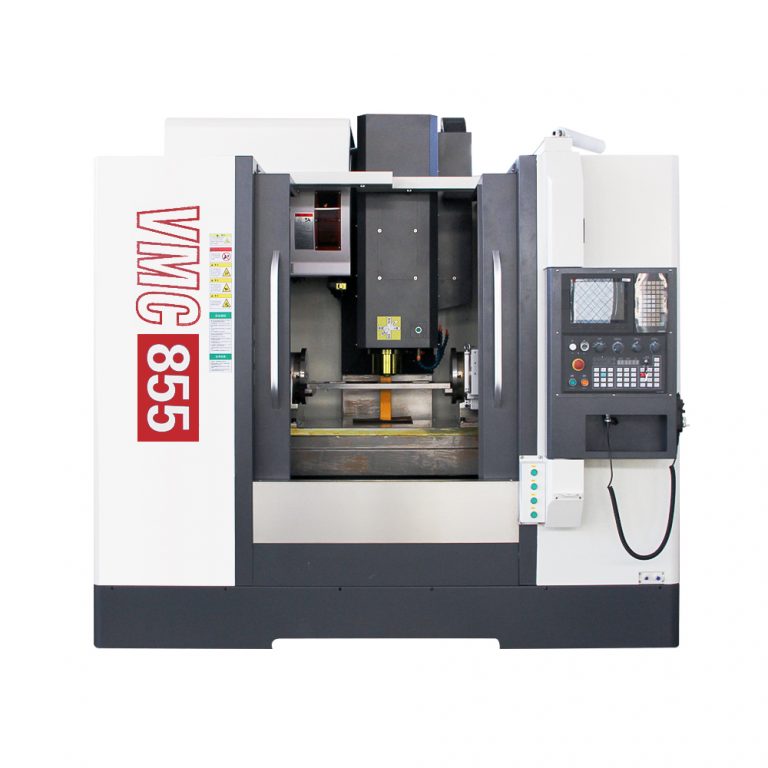
high speed vertical machining centers promise fast cycles and tight repeatability, but I’ve seen their promise get chewed up by a few persistent weaknesses. First, many setups treat speed as a single dial: crank up spindle speed and feed and expect miracles. That ignores tool dynamics, thermal growth, and limits of the ball screw and linear guideways. Second, control architecture is often old-school. Edge computing nodes and modern motion control can optimise feed rates in real time — yet shops still rely on fixed G-code profiles. The result? You get chatter, premature tool wear, and scrap — not faster throughput.
Why do these systems misbehave?
Mechanically, the system is only as good as its weakest element. A high rpm spindle with poor balancing will transmit vibration through the chassis. A cheap power converter can introduce torque ripple that upsets delicate finishing passes. I’ll say it plainly: many users underestimate heat and stiffness. Thermal growth shifts the workpiece by tiny amounts — tiny, but enough to matter at micron-level tolerances. We talk about servo drives and spindle speed a lot, but rarely about how quickly a machine can recover from a rapid direction change with a heavy tool. Those dynamics matter. Look, it’s simpler than you think: balance the mechanical, the electrical and the control strategy, and things start to behave — funny how that works, right?
Part 3 — Looking Forward: Principles and Practical Steps for Better Performance
Moving ahead, I’m keen to focus on principles that work across different shop sizes, not on shiny features alone. For a modern cnc vertical machine center, that means three interconnected improvements: smarter motion control (real-time feed correction and adaptive acceleration), integrated condition monitoring (vibration and thermal sensing), and modular power/drive systems that deliver clean torque. Together these reduce cycle variability and extend tool life. I’ve tested combinations where adaptive feeds trimmed finishing cycles by up to 30% while improving surface finish — and yes, the investment paid back in months.
Practically, adopters should prioritise easy wins first: retrofit a better tool changer and upgraded spindle bearings, then layer in control upgrades and edge analytics. Don’t bolt on complexity without a plan; you’ll only add points of failure. Also, consider the human side — upskilling operators to interpret vibration logs and make quick setup tweaks is as important as the hardware. Training takes time, but it prevents misuse of advanced features — and it makes a system sing. So when you compare options, weigh maintainability and training needs as heavily as headline specs — because that’s where long-term gains hide.
What to Measure — Three Metrics to Choose By
When you evaluate machines or retrofits, I recommend three clear metrics that I use myself:
1) Mean Cycle Time Reduction (percent) — track before and after on real parts, not on canned demo programs. This shows throughput gains.
2) Process Capability (Cpk) for key dimensions — this tells you whether precision improved, and by how much.
3) Overall Cost of Ownership over 36 months — include downtime, tooling, energy (power converters matter) and training. Don’t be swayed by low upfront price if operating costs are high.
In closing, I’ll leave you with this: upgrades that marry mechanical robustness (ball screw quality, linear guideways), electrical cleanliness (power converters, stable servo drives), and smarter control (edge analytics, adaptive feeds) consistently win on shops I visit. I believe that measured choices trump chasing specs. If you want a practical partner to test improvements on your floor, take a look at what Leichman offers — and then test in your own environment. I’m convinced you’ll see the difference, and so will your customers.